


Why the 20-20 Rule Is Important for Your Eyes
In today’s digital world, our eyes are working harder than ever. From smartphones and laptops to televisions and tablets, screen time has become a major part of daily life for students, professionals, and even children. While technology makes life easier, excessive screen use can lead to eye discomfort and vision problems. One simple yet highly effective way to protect your eyes is by following the 20-20-20 rule.
What Is the 20-20-20 Rule?
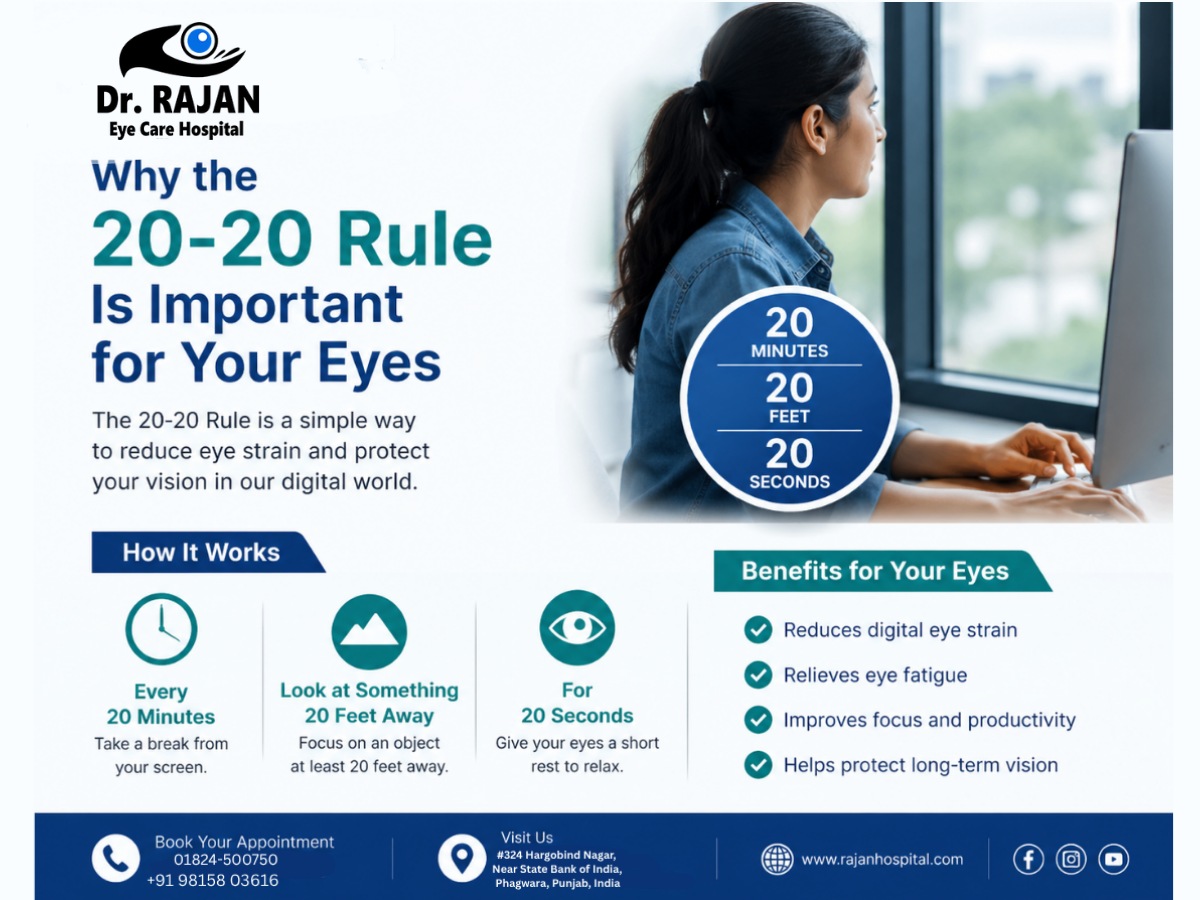
The 20-20-20 rule is a simple eye care habit designed to reduce eye strain caused by prolonged screen use. It works like this:
Every 20 minutes, look at something 20 feet away for at least 20 seconds.
This brief pause gives your eyes a chance to relax and refocus, preventing fatigue and discomfort
Why Is the 20-20-20 Rule Important?
1. Reduces Digital Eye Strain
Staring at screens for long periods forces your eye muscles to stay focused at one distance. Over time, this leads to digital eye strain, also known as computer vision syndrome. Symptoms may include:
- Tired or heavy eyes
- Blurred vision
- Headaches
- Burning or dry eyes
- Difficulty focusing
Practicing the 20-20-20 rule helps your eyes relax and reduces these uncomfortable symptoms.
2. Prevents Dry Eyes
When using screens, people tend to blink less often. Reduced blinking causes the eyes to dry out, leading to irritation and redness. Taking regular breaks encourages blinking, helping maintain proper eye moisture and comfort.
3. Improves Focus and Productivity
Taking short eye breaks improves concentration and prevents mental fatigue. Many people find that after following the 20-20-20 rule, they return to work with better focus and improved productivity.
4. Supports Long-Term Eye Health
Although the 20-20-20 rule does not replace regular eye checkups, it helps reduce daily stress on your eyes. Over time, this can contribute to better overall eye health, especially for individuals who spend many hours on digital devices.
Who Should Follow the 20-20-20 Rule?
The 20-20-20 rule is beneficial for:
- Students attending online classes
- Office workers using computers for long hours
- Children using smartphones or tablets
- Professionals working on digital devices
- Gamers and content creators
Essentially, anyone who spends more than two hours daily on screens should make this rule a part of their routine.
How to Practice the 20-20-20 Rule Effectively
Here are some simple ways to build this habit:
- Set a timer on your phone or computer every 20 minutes.
- Look out of a window at distant objects like trees or buildings.
- Blink several times during the break to keep your eyes moist.
- Stretch your neck and shoulders to reduce overall fatigue.
Making this rule a daily habit can significantly reduce eye discomfort.
Additional Tips for Healthy Eyes
Along with the 20-20-20 rule, follow these tips for better eye care:
- Maintain proper screen distance (about arm’s length).
- Adjust screen brightness to comfortable levels.
- Use adequate lighting while working.
- Avoid using screens in complete darkness.
- Schedule regular eye examinations.
When Should You Visit an Eye Specialist?
If you experience persistent symptoms such as blurred vision, frequent headaches, or eye discomfort despite following healthy habits, it is important to consult an eye care professional.
Regular eye checkups help detect vision problems early and ensure your eyes stay healthy for years to come.
Conclusion
The 20-20-20 rule is a simple yet powerful habit that can protect your eyes from the harmful effects of prolonged screen time. In a world where digital devices are unavoidable, taking small breaks can make a big difference in maintaining comfortable and healthy vision.
At Dr. Rajan Eye Care, we encourage everyone—students, professionals, and families—to adopt the 20-20-20 rule as part of their daily routine. Healthy eyes are essential for a better quality of life, and caring for them today ensures clearer vision tomorrow.